


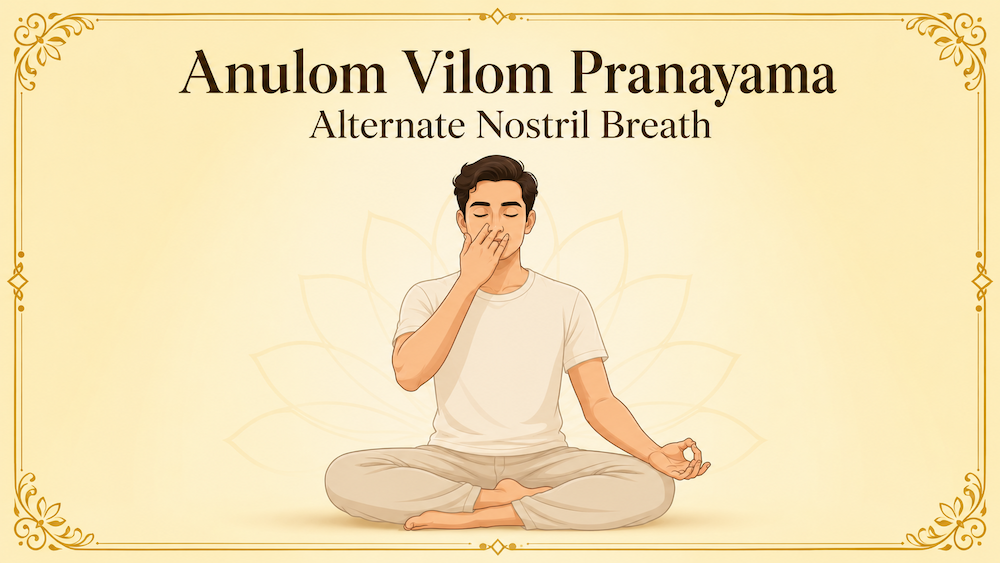
Anulom Vilom is one of the simplest and most beginner-friendly breathing practices in yoga. In this technique, you breathe through one nostril at a time in a slow, steady rhythm, which can help calm the nervous system, quiet the mind, and balance the breath.
Because it does not involve breath retention or complicated ratios, Anulom Vilom is often recommended as an accessible starting point for pranayama. In this guide, we’ll explore what it is, how it works, its benefits, and how to practice it step by step.
Anulom Vilom is a yogic breathing technique in which you breathe through one nostril at a time in an alternating pattern. You inhale through one nostril, exhale through the other, then reverse the sequence. This steady rhythm helps quiet the mind, regulate the breath, and create a feeling of inner balance.
In yogic tradition, the left nostril is linked with Ida nadi, the cooling and calming energy channel, while the right nostril is linked with Pingala nadi, the warming and activating channel. By alternating the breath between the two, Anulom Vilom is believed to balance these opposite energies and support a smoother flow of prana through the body.
Anulom Vilom is often taught as a preparatory pranayama because it settles the breath gently, without intensity. Unlike Nadi Shodhana, which adds breath retention and structured ratios, Anulom Vilom keeps the practice simple, smooth, and beginner-friendly.
Explore the benefits of pranayama and other techniques in this detailed guide!
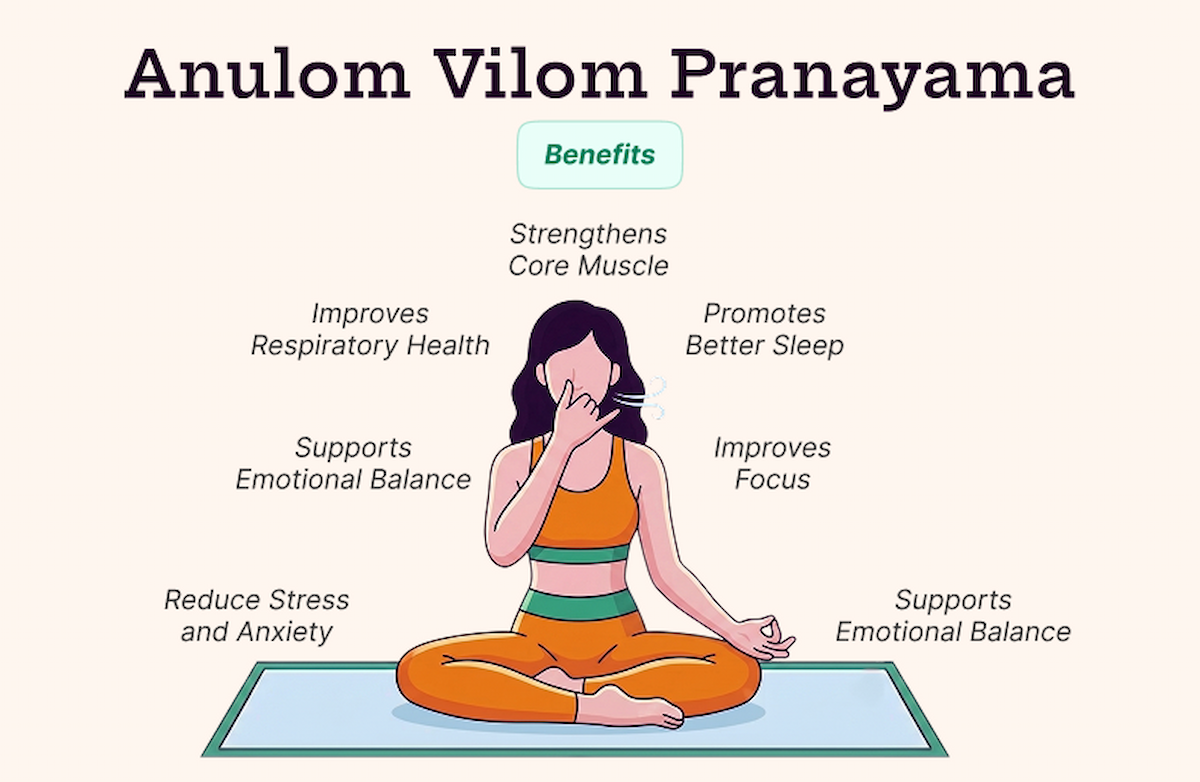
Anulom Vilom is valued for its calming, balancing effect on both the breath and the mind. Because the technique is gentle and rhythmic rather than forceful, many people notice its effects even after just a few minutes of practice.
While Anulom Vilom can be a helpful support for overall well-being, it should not be treated as a substitute for medical care.
[GC]
Sit comfortably in Sukhasana or on a chair with your spine tall and your shoulders relaxed. Rest your left hand on your left knee. Your right hand will control the nostrils using a simple hand position often called Vishnu Mudra — gently fold the index and middle fingers toward the palm, leaving the thumb, ring finger, and little finger free.
Unlike Nadi Shodhana, Anulom Vilom does not include breath retention. The breath should remain smooth and continuous throughout.
You may notice a growing sense of calm, steadier breathing, and less mental noise after a few rounds. A mild awareness around the nostrils is normal.
[inline-CTA-1]
Beginners should start with 5 rounds daily, which usually takes about 2–3 minutes, and gradually build up from there. With regular practice, many people extend their session to 5–10 minutes a day, depending on comfort and consistency.
What matters most is consistency, not doing a long session once in a while. Morning on an empty stomach is ideal, but Anulom Vilom can also work very well in the evening when you want to unwind or prepare for sleep.
Anulom Vilom and Nadi Shodhana use the same alternate nostril breathing pattern, but they are not exactly the same practice. Anulom Vilom is the simpler version, while Nadi Shodhana adds breath retention and more structured breathing ratios.
If you are new to pranayama, Anulom Vilom is usually the better place to start. Once the nostril pattern feels natural and the breath becomes steady, Nadi Shodhana can be introduced more comfortably. Many practitioners use Anulom Vilom as a daily practice and reserve Nadi Shodhana for longer or more formal pranayama sessions.
[inline-CTA-2]
Anulom Vilom is one of the simplest and most accessible pranayama techniques, yet its effects can be deeply calming and balancing. By guiding the breath through an easy alternating pattern, it helps settle mental noise, support emotional steadiness, and create a strong foundation for deeper breathwork. With regular practice, it can become a reliable tool for finding calm in the middle of a busy day.

Anulom Vilom is a yogic breathing technique in which you inhale through one nostril and exhale through the other in an alternating pattern, without holding the breath. It is commonly practiced to calm the nervous system, reduce stress, balance energy, and improve focus.
Both use the same alternate nostril breathing pattern, but Nadi Shodhana includes breath retention and specific ratios, while Anulom Vilom is simpler and does not involve breath holds. This makes Anulom Vilom more beginner-friendly and easier to practice daily.
It is best to practice Anulom Vilom on an empty stomach or at least 2–3 hours after a meal. If you need to practice sooner, wait at least 1–2 hours and keep the breath slow and gentle.
Beginners can start with 5 rounds, using a simple count of 4 for the inhale and 4 for the exhale. This usually takes just a few minutes and is enough to begin noticing its calming effects.





Receive personalized guidance tailored to your unique fitness goals, live with a dedicated coach—no credit card required.

.webp)
Bhastrika pranayama is yoga's most energizing breathing technique. Learn its benefits, the 3 types, a step-by-step practice guide, and who should avoid it.

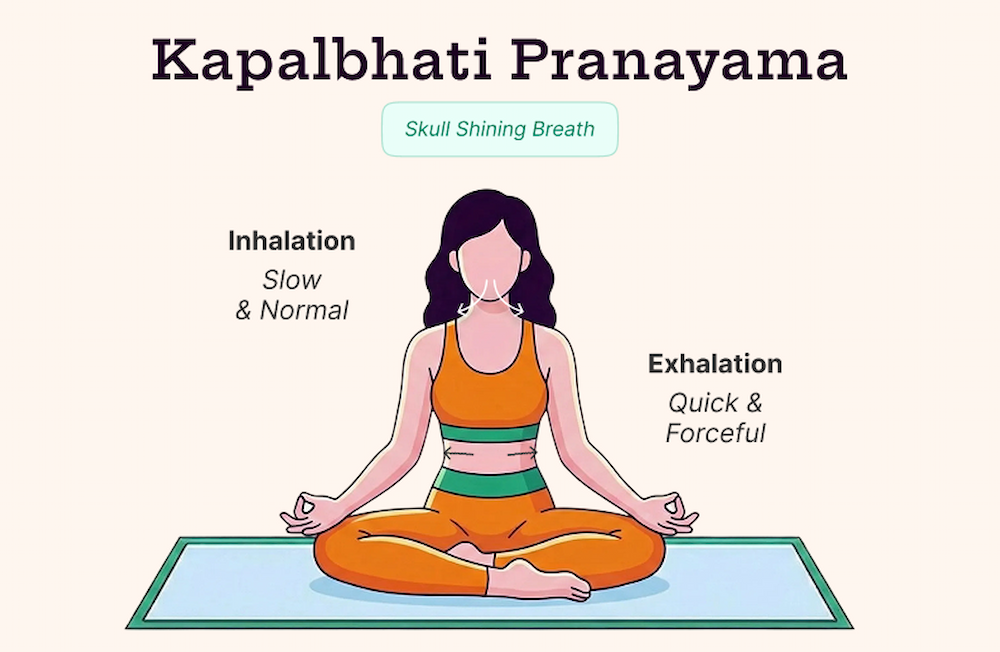
Kapalbhati is a powerful breathing technique for energy, digestion, and mental clarity. Learn its benefits, step-by-step method, and how long to practice daily.

Learn how to do Ujjayi breathing (Ocean Breath) step by step. Discover its benefits for focus, stress relief, and thyroid health — guided by certified Indian yoga teachers.


© Copyright 2025 MyYogaTeacher Inc


