


.webp)
Bhastrika pranayama, or Bellows Breath, is one of the most energizing breathing practices in yoga. Known for its strong, rapid rhythm, it is commonly used to build heat, awaken the body, and sharpen mental focus in just a few minutes.
Unlike Kapalbhati, where only the exhale is active, Bhastrika uses force on both the inhale and exhale, which makes it more intense and better suited to intermediate practitioners. In this guide, we’ll explore what Bhastrika is, how it works, its benefits, and how to practice it safely.
Bhastrika pranayama (Bellows Breath) is a yogic breathing technique in which both the inhale and exhale are active, strong, and equal in effort. The breath moves in a steady rhythm, much like the pumping of a bellows used to fan a fire.
This is what makes Bhastrika stand out. In many breathing techniques, one part of the breath is softer or more natural. In Bhastrika, both the inhale and exhale are done with intention. That is why it feels more energizing, more heat-building, and more intense than gentler pranayama practices.
The word Bhastrika means “bellows” in Sanskrit, which reflects the way the practice is believed to build inner heat and awaken energy. In classical yoga, Bhastrika is considered one of the traditional pranayama techniques and may be practiced with breath retention. Today, it is often taught in a simpler form first, without retention, so that the technique can be learned gradually and safely.
Explore the complete guide to pranayama techniques here.
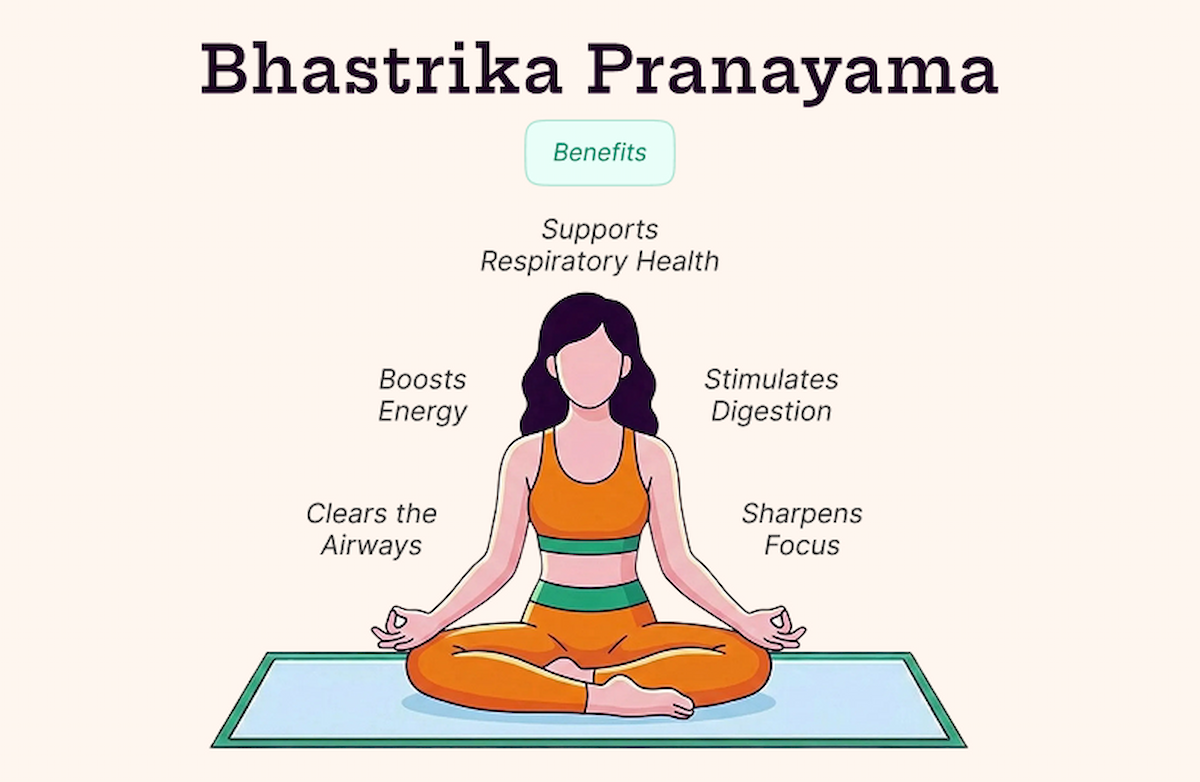
Bhastrika pranayama is known for its strong energizing effect. Because both the inhale and exhale are active, the technique works more intensely than most other breathing practices and can influence the respiratory, circulatory, and nervous systems very quickly.
While Bhastrika can be a powerful supportive practice, it is not appropriate for everyone and should not be treated as a substitute for medical care.
[GC]
Before you begin, sit in a comfortable position such as Sukhasana, or on a chair with your spine tall, and your shoulders relaxed. Rest your hands on your knees and soften the face, jaw, and chest.
Bhastrika should always be practiced on an empty stomach, ideally at least 3–4 hours after a meal. If you are new to rapid breathing techniques, start slowly with 10–15 strokes per round.
If you have never practiced Kapalbhati or other active breathwork before, it is best to build some familiarity with those techniques first.
You may notice warmth in the chest, abdomen, and face, along with a sense of alertness and increased energy. The breath should feel powerful but still controlled.
Stop immediately if you feel dizziness, nausea, chest tightness, tingling in the lips, or any sense of strain. Return to normal breathing and rest.
[inline-CTA-1]
There are three types of Bhastrika Pranayama, usually classified by pace: slow, medium, and fast. The right type depends on your experience level, breath control, and the intensity of practice your body can handle safely.
Beginners should start only with slow Bhastrika until the breath feels steady and the technique is fully established.
Fast Bhastrika should be learned only under the guidance of a qualified teacher, since the higher intensity can quickly lead to strain or hyperventilation if the rhythm breaks down.
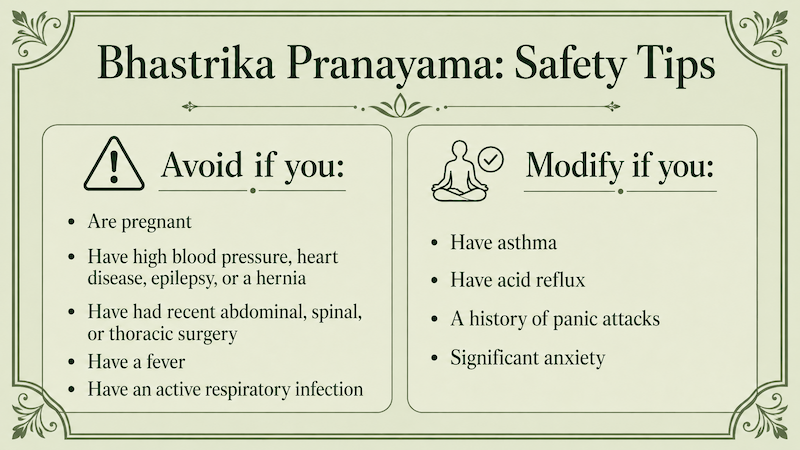
Bhastrika is a powerful intermediate-level breathing technique, and it is not suitable for everyone. Because it involves rapid, forceful breathing and strong stimulation of the nervous system, it should only be practiced when the body is healthy, and the technique feels steady.
You should avoid Bhastrika if you:
Practice only with caution and proper guidance if you:
If you are new to pranayama, it is best to begin with gentler techniques such as Nadi Shodhana or Bhramari before attempting Bhastrika.
[inline-CTA-2]
Bhastrika pranayama is a strong, activating breath practice that can quickly energize the body, clear the mind, and build internal heat. When practiced correctly, it can be a powerful addition to a yoga or pranayama routine, especially in the morning or before meditation. The key is to approach it with respect, start gradually, and build the practice only as your breath and body become ready.

Bhastrika pranayama is a forceful yogic breathing technique in which both the inhale and exhale are active and equal in effort. It is practiced to generate heat, increase energy, clear the respiratory passages, and sharpen mental focus.
Morning is generally the best time to practice Bhastrika, especially on an empty stomach. Because it is highly energizing, it is usually better avoided in the evening or close to bedtime.
The main difference is that in Kapalbhati, only the exhale is active, while in Bhastrika, both the inhale and exhale are forceful. This makes Bhastrika more intense and usually less suitable for complete beginners.
Beginners can start with 2–3 rounds of 10 strokes each, resting for 30–60 seconds between rounds. It is best to increase the number of strokes gradually as the technique becomes more comfortable and steady.




Receive personalized guidance tailored to your unique fitness goals, live with a dedicated coach—no credit card required.

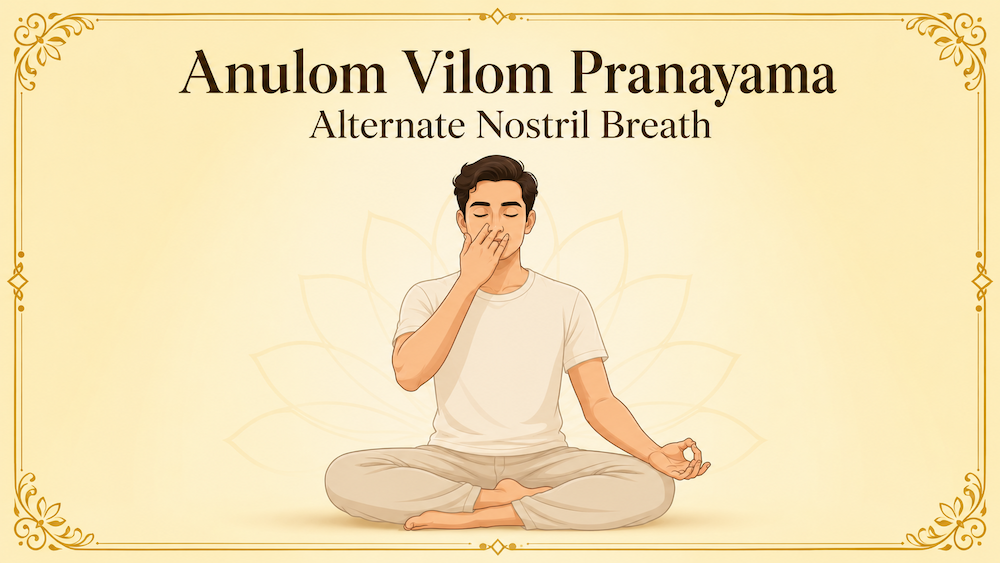
Anulom Vilom is yoga's most beginner-friendly breathing technique. Learn its benefits for stress, focus, and skin health with a clear step-by-step guide.

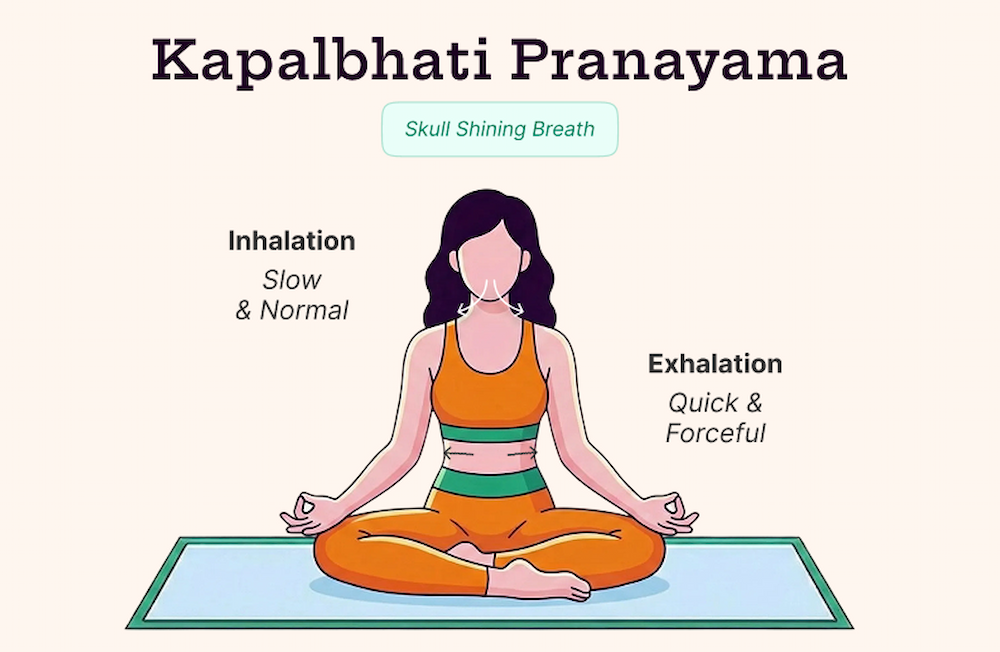
Kapalbhati is a powerful breathing technique for energy, digestion, and mental clarity. Learn its benefits, step-by-step method, and how long to practice daily.
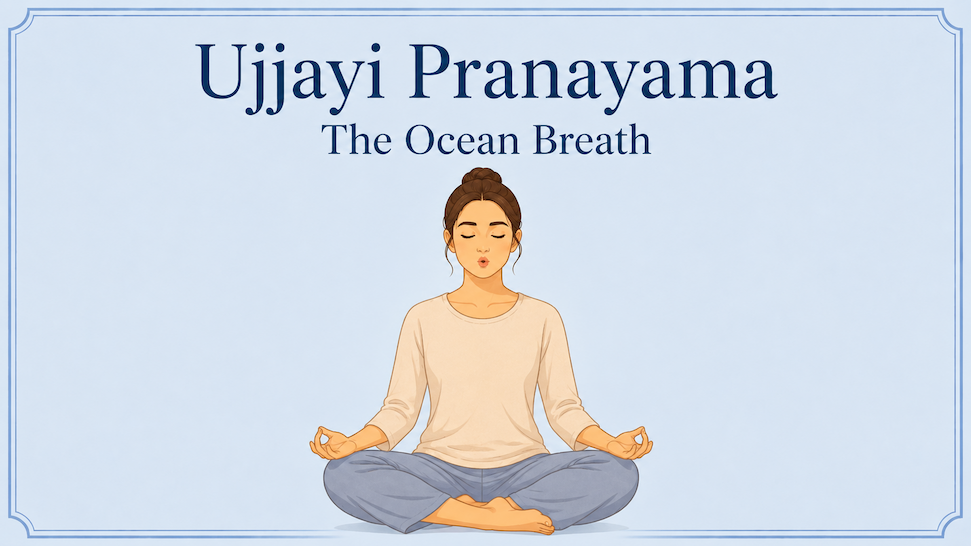
Learn how to do Ujjayi breathing (Ocean Breath) step by step. Discover its benefits for focus, stress relief, and thyroid health — guided by certified Indian yoga teachers.


© Copyright 2025 MyYogaTeacher Inc


