


.webp)
Pranayama is a traditional yoga practice that uses conscious breathing to support your energy, focus, and mental state.
For many people today, that matters more than ever. Stress, mental fatigue, shallow breathing, poor sleep, and constant distraction have become part of daily life. Pranayama offers a simple but powerful way to slow down, calm the nervous system, and reconnect with the breath in a more intentional way.
In this guide, you’ll learn what pranayama is, its meaning, key benefits, common types, and how beginners can start safely.
Pranayama is more than a breathing exercise. In yoga, it is a structured practice of working with the breath to influence your energy, attention, and state of mind. Rather than breathing automatically, you learn to breathe with awareness and control.
The word pranayama comes from two Sanskrit terms: prana, meaning life force or vital energy, and ayama, meaning expansion, extension, or regulation. Together, the word points to the practice of regulating energy through the breath.
Traditionally, pranayama works with three main parts of the breath:
Some pranayama techniques use slow, steady breathing, while others include sound, alternate nostril breathing, or more energizing patterns. What connects them all is awareness. The breath becomes a tool to steady the mind, support the nervous system, and prepare for meditation.
In classical yoga, pranayama is the fourth limb of Patanjali’s Eight Limbs of Yoga, coming after asana, or physical posture. It acts as a bridge between the body and the mind. After working with movement in asana, pranayama helps refine attention and prepare for concentration and meditation.
Patanjali mentions pranayama in the Yoga Sutras, and later texts such as the Hatha Yoga Pradipika explain specific techniques in more detail. These teachings have shaped pranayama for centuries, especially in Indian yoga traditions.
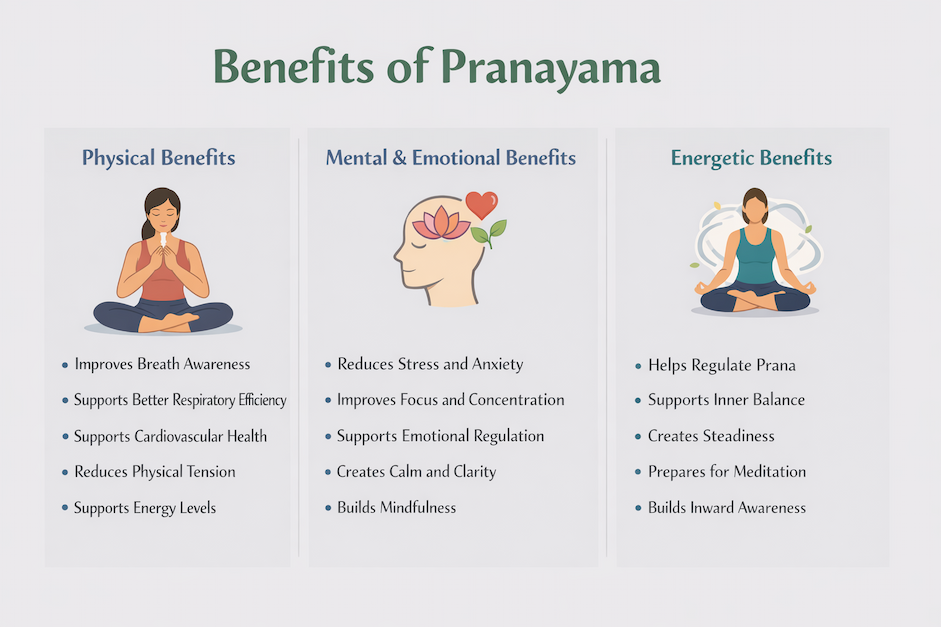
When practiced regularly and correctly, Pranayama can support the body, calm the mind, and help you feel steadier throughout the day. Some of its many benefits include:
Pranayama supports physical health by improving the way you breathe and how your body responds to stress.
For people who often feel tired, restless, or tight in the body, pranayama can be a simple and effective place to start.
According to studies, Pranayama helps interrupt the cycle between stress, shallow breathing, and mental agitation. When your breath becomes slower and more even, the mind often follows.
Regular practice may help:
This matters because breathing and the nervous system state are closely connected. When you are anxious, your breath usually becomes fast or irregular. When you intentionally slow and steady the breath, you send the body a signal that it is safe to relax. Over time, this can help you respond to stress with more awareness and less reactivity.
In yoga, pranayama is valued not only for stress relief but also for its ability to influence energy, balance, and inner awareness.
[inline-CTA-1]
Classical Hatha Yoga texts describe 8 principal kumbhakas, but in modern practice, most beginners are introduced to a smaller group of foundational techniques.
These 7 types of pranayama are among the most commonly taught because they are practical, accessible, and each supports a different goal.
Learn about the types of yoga breath in this detailed guide!
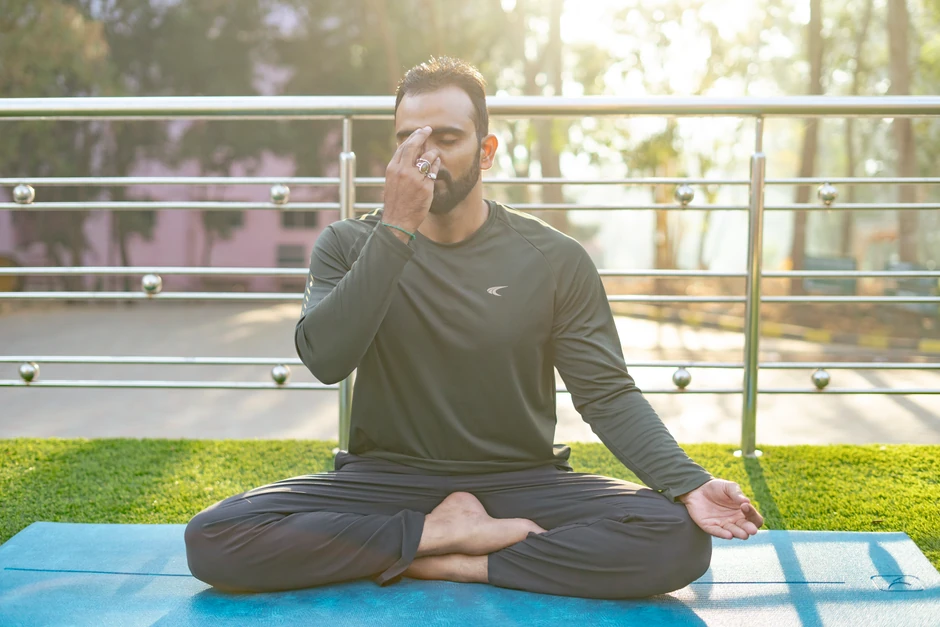
Nadi Shodhana is one of the best-known pranayama breathing techniques for beginners. It involves breathing through one nostril at a time in an alternating pattern, usually using the right hand to gently close each nostril in sequence. In yoga, it is traditionally said to help balance the energy channels, while in modern terms, it is often experienced as calming, centering, and mentally clarifying.
This technique is especially helpful when you feel scattered, anxious, or overstimulated. Because the pace is slow and controlled, it is often one of the safest ways to begin a pranayama practice. It is also commonly taught before meditation because it helps settle the breath without straining it.
Bhramari pranayama uses a soft humming sound during the exhale. The sound creates a gentle vibration that many people find deeply soothing, especially when the mind feels noisy or restless. It is often used to reduce mental agitation and help the body shift into a quieter, more relaxed state.
For beginners, Bhramari can feel more accessible than techniques that require counting or hand positions. The humming naturally lengthens the exhalation, which may support relaxation. It is often practiced in the evening, before meditation, or anytime you need to decompress after a mentally demanding day.
Kapalabhati is a more energizing pranayama technique that uses a series of quick, active exhalations powered by the lower belly, with passive inhalations in between. It is often described as cleansing, heating, and stimulating. Unlike slow calming practices, Kapalabhati creates a very different effect: it wakes up the system.
Because it is more active, Kapalabhati is usually better once a beginner has some awareness of abdominal breathing and breath control. It may support alertness and respiratory strength, but it should be practiced carefully and avoided during pregnancy, after abdominal surgery, or by those with certain medical conditions unless guided by a qualified teacher.
Bhastrika is another energizing technique, but it is stronger and more forceful than Kapalabhati. It uses active inhalations and active exhalations in a rhythmic pattern, often creating heat and a sense of intensity in the body. Traditionally, it is used to increase vitality and clear dullness.
Because Bhastrika is more stimulating, it is not usually the first pranayama taught to beginners. Done incorrectly, it can feel overwhelming or create lightheadedness.
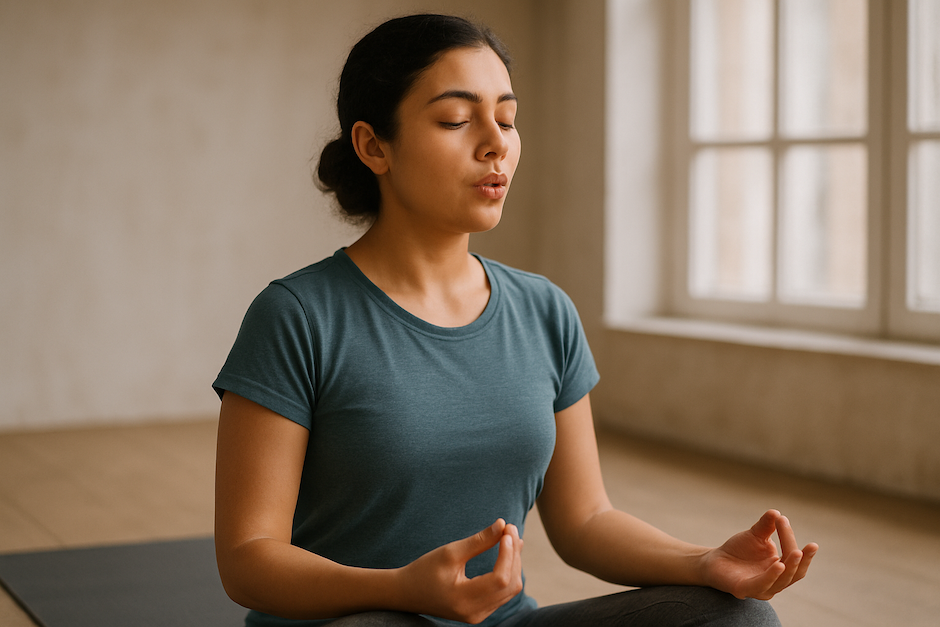
Ujjayi pranayama is sometimes called Ocean Breath because of the soft whispering sound created at the back of the throat. The breath remains slow and even, but with a light constriction that makes it easier to focus on the sensation and sound of breathing. It is widely used in yoga classes, especially in flowing styles such as Vinyasa.
Ujjayi helps create steadiness and concentration. It can make the breath feel more tangible, which is useful for people whose minds tend to wander. Because it is both grounding and mildly warming, Ujjayi works well during movement practice as well as seated breath awareness.
Anulom Vilom is often grouped with alternate nostril breathing and is sometimes used interchangeably with Nadi Shodhana in popular yoga teaching, though lineages may teach them slightly differently. In general, Anulom Vilom involves a steady pattern of inhaling through one nostril and exhaling through the other to encourage balance and calm.
For beginners, this is another accessible entry point into pranayama because it builds rhythm, patience, and breath awareness without needing force. Many practitioners find it helpful during stressful phases of life because it slows down the breath and gives the mind a simple structure to follow.
Sheetali and Sheetkari are cooling pranayama techniques traditionally used to reduce internal heat and calm excess intensity. Sheetali usually involves inhaling through a curled tongue, while Sheetkari uses the teeth and mouth when the tongue cannot curl. Both are followed by a slow exhale through the nose.
These practices can feel especially helpful in hot weather, after physical exertion, or during moments of irritability and restlessness. They are gentle and beginner-friendly, though they may not be ideal in very cold climates or for those who are feeling physically chilled.
Together, these seven techniques give beginners a broad but manageable introduction to the types of pranayama most commonly used in modern yoga practice.
[GC]
Starting pranayama does not have to be complicated. In fact, beginners usually do best with a short, steady routine rather than trying several advanced techniques at once.
The goal is not to control the breath forcefully. It is to become aware of it, gradually refine it, and let the breath support a calmer, clearer state of mind.
A few simple basics can make your pranayama practice more comfortable and effective:
This sequence works well because Dirga helps you slow down and connect with fuller breathing before moving into a more structured pattern like Nadi Shodhana. It gives beginners both grounding and clarity without adding strain.
Learn pranayama correctly from the start with guidance that is personal, safe, and rooted in tradition.
[inline-CTA-2]
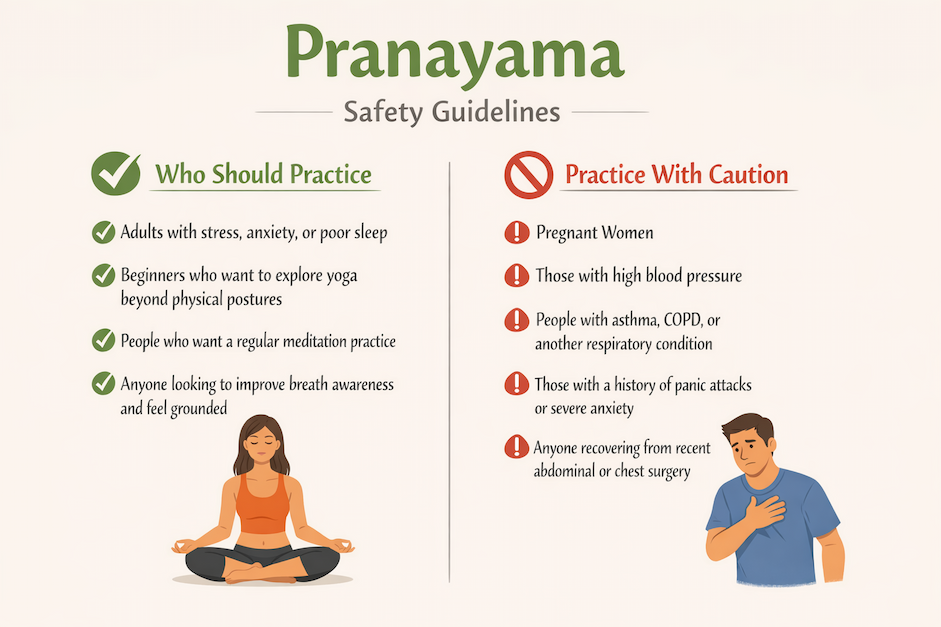
Pranayama can be helpful for many people, especially those looking for a simple, low-impact way to manage stress, improve breath awareness, and support mental clarity. It is often a good fit for beginners because many foundational practices are gentle, adaptable, and do not require a high level of physical fitness.
Pranayama may be especially useful for:
Some people with respiratory challenges may also benefit from pranayama, but the technique and pacing matter. In those cases, working with a qualified teacher is especially important so the practice can be adjusted safely.
At the same time, not every pranayama technique is right for every person. More forceful methods such as Kapalabhati, Bhastrika, or advanced breath retention may not be appropriate without guidance.
Practice with caution, or consult a doctor first, if you:
In general, calming techniques such as Dirga, Nadi Shodhana, and Bhramari are better starting points for most beginners than strong activating practices. The safest approach is to begin gently, stay within your comfort range, and avoid forcing the breath.
Pranayama is a supportive wellness practice, but it is not a replacement for medical care. If you have a health condition or are unsure where to start, learning with an experienced teacher can help you practice more safely and confidently.

Seven common types of pranayama are
Nadi Shodhana helps with balance and calm, Bhramari soothes the mind, Kapalabhati energizes, Bhastrika builds heat and vitality, Ujjayi improves focus, Anulom Vilom supports relaxation, and Sheetali cools the body and mind.
For most beginners, Dirga Pranayama (Three-Part Breath) and Nadi Shodhana (Alternate Nostril Breathing) are the best places to start. Both are gentle, easy to learn, and do not require force or advanced breath retention. They help build breath awareness, calm the nervous system, and create a strong foundation before trying more energizing techniques.
Five common beginner-friendly pranayama techniques are
The first two are usually the easiest starting points. As comfort and awareness improve, the others can be added gradually with proper guidance.
Beginners can start with 5 to 10 minutes a day. That is enough to build consistency and notice benefits over time. Intermediate practitioners may practice for 15 to 20 minutes, while more experienced students may include longer pranayama sessions within a broader yoga routine. Daily practice matters more than doing a long session once in a while.
For the most effective practice and results, book a free 1-on-1 session today!
Both pranayama and breathwork use conscious breathing to influence stress, focus, and emotional state, but pranayama is a traditional yogic practice with a deeper philosophical foundation. It is part of the broader system of yoga and is traditionally practiced to support not just breath awareness, but also energy, concentration, and meditation.
Breathwork is a broader modern term that can include pranayama along with methods like box breathing, coherent breathing, and Wim Hof breathing.
In simple terms, pranayama is a specific yogic branch of breath practice, while breathwork is the wider umbrella.




Receive personalized guidance tailored to your unique fitness goals, live with a dedicated coach—no credit card required.

.webp)
Bhastrika pranayama is yoga's most energizing breathing technique. Learn its benefits, the 3 types, a step-by-step practice guide, and who should avoid it.

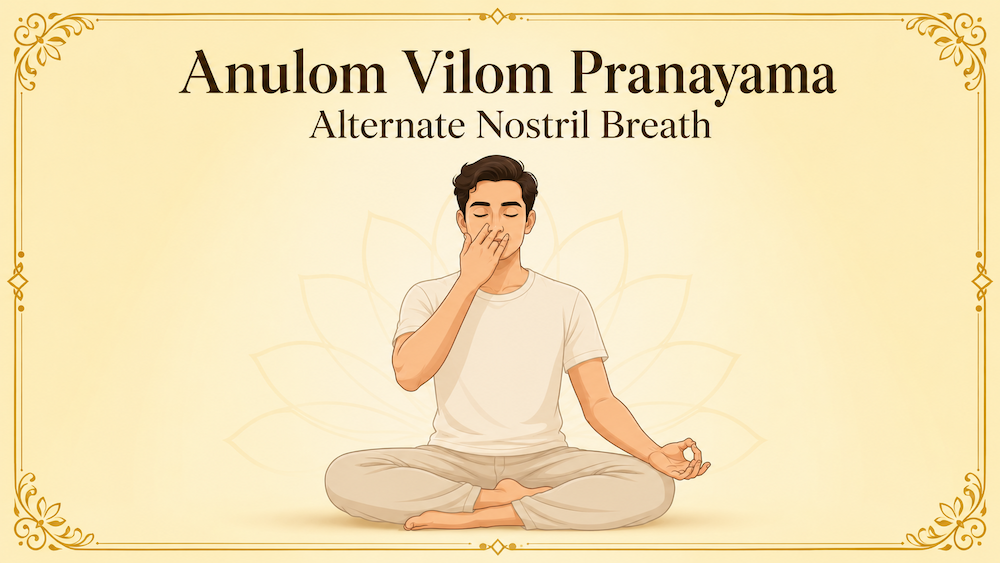
Anulom Vilom is yoga's most beginner-friendly breathing technique. Learn its benefits for stress, focus, and skin health with a clear step-by-step guide.
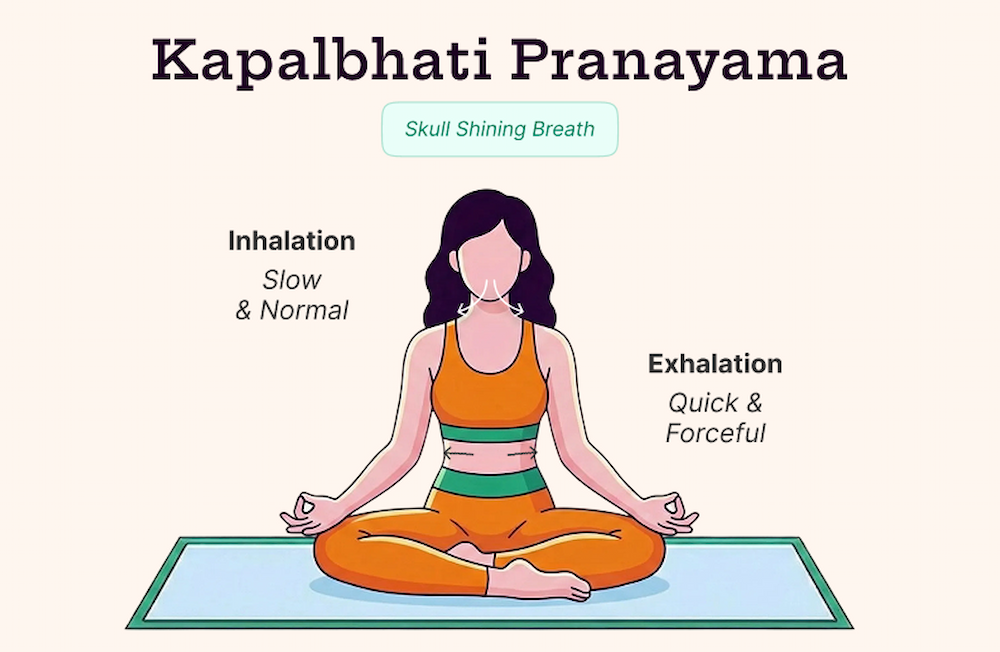
Kapalbhati is a powerful breathing technique for energy, digestion, and mental clarity. Learn its benefits, step-by-step method, and how long to practice daily.


© Copyright 2025 MyYogaTeacher Inc


