


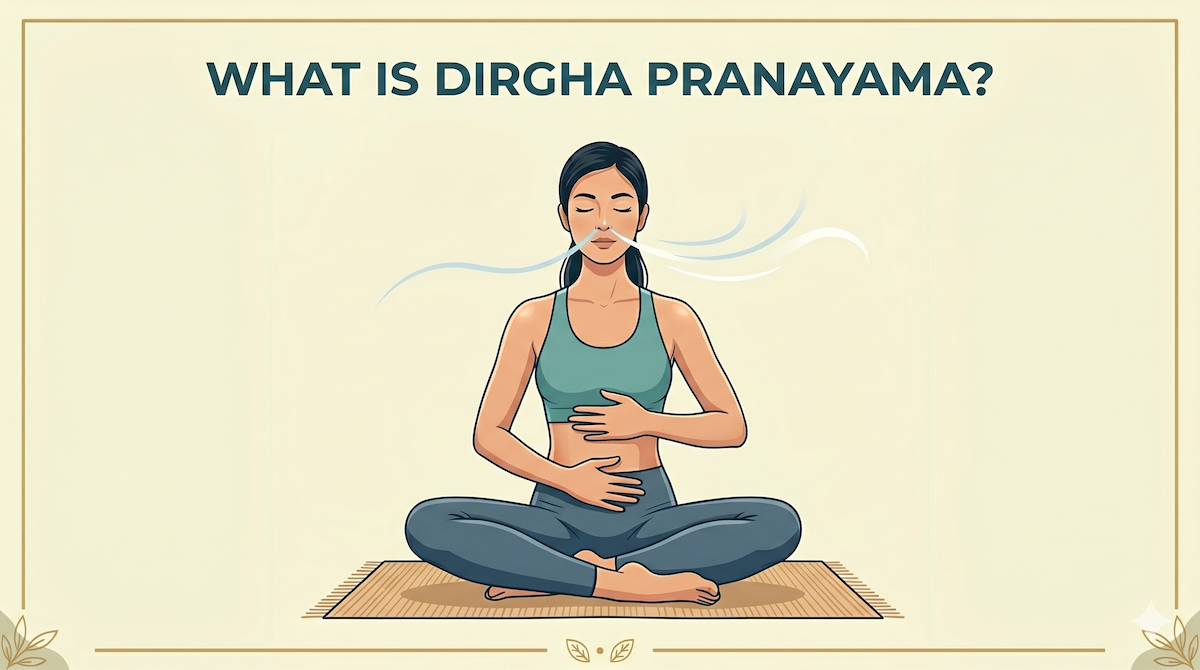
Dirgha pranayama, also known as Three-Part Breath, is one of the most foundational breathing techniques in yoga. Simple, calming, and easy to learn, it teaches you how to breathe more fully by moving the breath through three stages: the belly, ribcage, and upper chest. Because of this, it is often considered a starting point for pranayama practice and as a reset for moments of stress, fatigue, or mental overload.
Dirgha pranayama, also called Three-Part Breath, is a foundational yogic breathing technique in which the lungs are filled in three stages: first the belly, then the ribcage, and finally the upper chest. The exhale happens in reverse, creating a breath that feels full, smooth, and complete.
In Sanskrit, dirgha means long or extended, which makes this name especially fitting. Rather than breathing shallowly into just one part of the chest, Dirgha pranayama teaches you to use the full capacity of the breath. It is often considered one of the best introductory pranayama techniques because it builds breath awareness without adding complexity. For many practitioners, it becomes the foundation for other breathing practices like Nadi Shodhana, Ujjayi, and Bhramari.
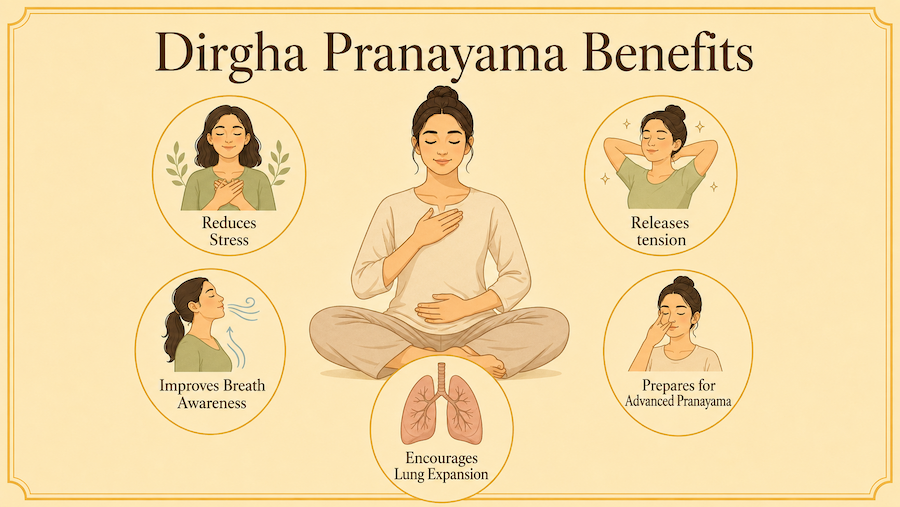
Because Dirgha pranayama trains the body to breathe more fully, its benefits often extend beyond the practice itself. Over time, it can improve the quality of your everyday breathing, making each breath feel steadier, deeper, and more efficient.
While Dirgha pranayama can be a helpful support for overall well-being, it should not be treated as a substitute for medical care.
To explore the full benefits of Pranayama, read this detailed guide.
[inline-CTA-1]
Dirgha pranayama can be practiced seated or lying down. For beginners, lying in Savasana often makes it easier to feel the natural rise and fall of the belly. You may place one hand on the belly and one on the upper chest to make the movement of the breath easier to notice.
You may notice a sense of fullness in the lungs, more space in the chest, and a gradual feeling of calm. After a few rounds, the breath often becomes slower and more settled on its own.
[GC]
Dirgha pranayama is one of the most versatile breathing techniques because it is simple, calming, and easy to return to at any time of day. Here’s how to use it for holistic results:
Dirgha pranayama, or Three-Part Breath, is a simple yet powerful practice that helps you breathe more fully and consciously. By guiding the breath through the belly, ribcage, and upper chest, it can calm the nervous system, reduce stress, and create a strong foundation for other pranayama techniques. Because it is gentle and beginner-friendly, it is one of the easiest breathing practices to return to whenever you need to reset.

Dirgha pranayama is a foundational yogic breathing technique in which you inhale in three stages — the belly, ribcage, and upper chest — and exhale in reverse. It is also known as the Three-Part Breath and is often taught as one of the most beginner-friendly pranayama practices.
Dirgha pranayama may improve breath awareness, encourage fuller lung expansion, activate the relaxation response, and help reduce stress. Because it is simple and accessible, it is also commonly used as a preparatory breath before other pranayama techniques.
Normal breathing is usually unconscious and often shallow. Dirgha pranayama is intentional and sequential, guiding the breath through the belly, ribcage, and upper chest to create a deeper, fuller, and more complete breathing pattern.




Receive personalized guidance tailored to your unique fitness goals, live with a dedicated coach—no credit card required.

.webp)
Bhastrika pranayama is yoga's most energizing breathing technique. Learn its benefits, the 3 types, a step-by-step practice guide, and who should avoid it.

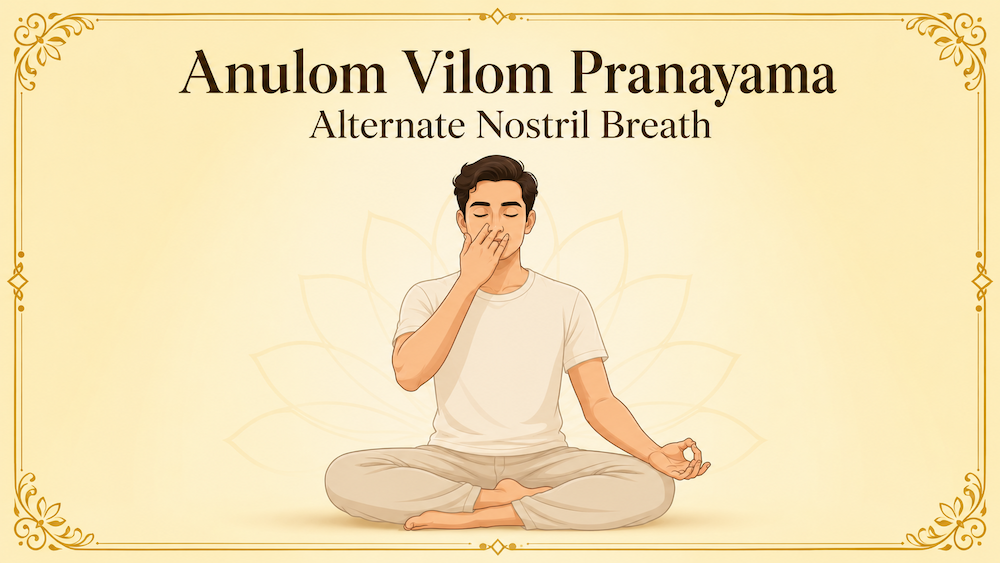
Anulom Vilom is yoga's most beginner-friendly breathing technique. Learn its benefits for stress, focus, and skin health with a clear step-by-step guide.
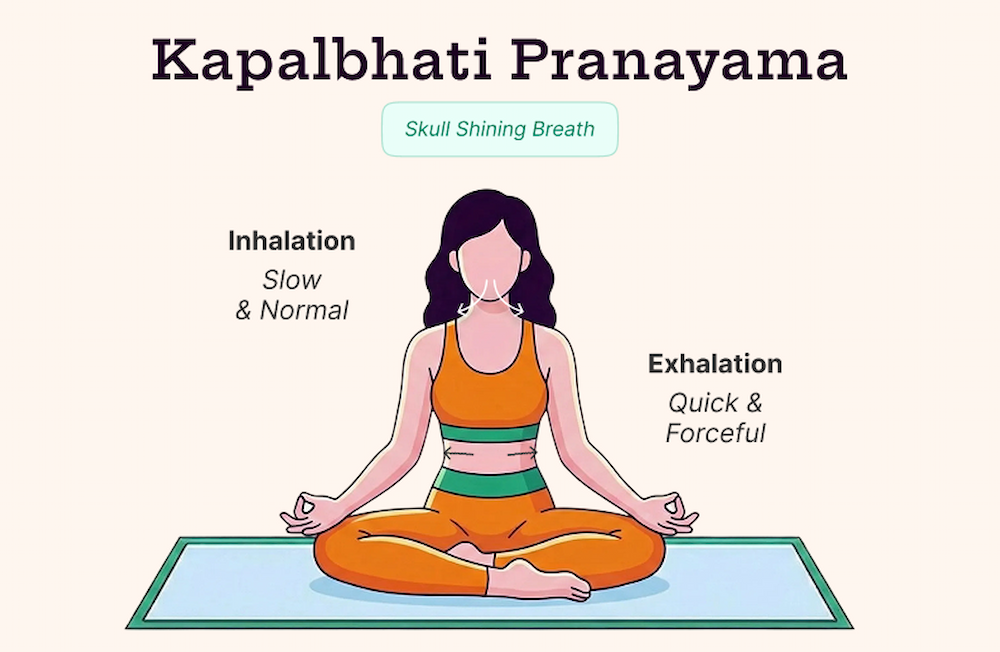
Kapalbhati is a powerful breathing technique for energy, digestion, and mental clarity. Learn its benefits, step-by-step method, and how long to practice daily.


© Copyright 2025 MyYogaTeacher Inc


